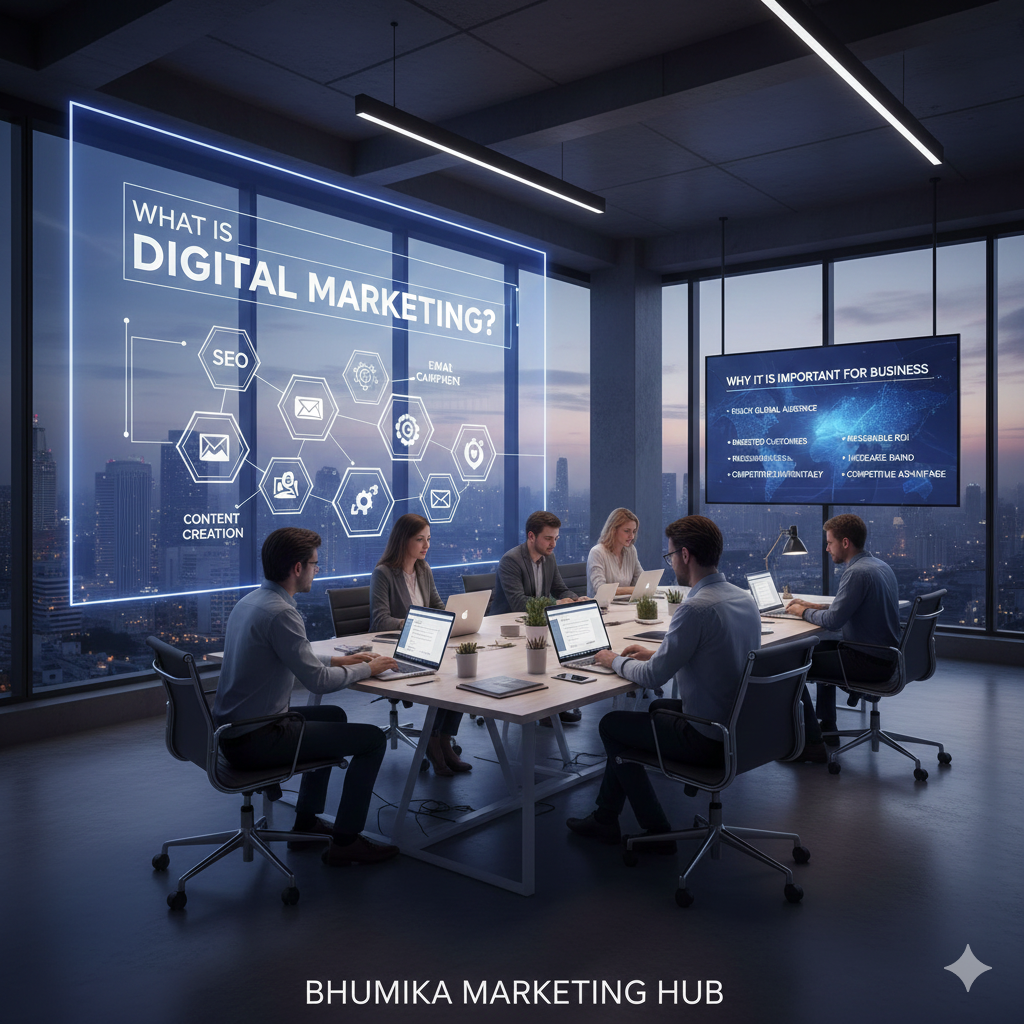
In today’s fast-paced digital world, the way businesses connect with customers has completely changed. Traditional marketing methods like newspapers, banners, and television ads are no longer enough on their own. People now spend most of their time online—searching on Google, scrolling through social media, watching videos, and shopping through websites. This shift has made digital marketing an essential part of every successful business strategy.
What Is Digital Marketing?
Digital marketing refers to all marketing efforts that use the internet or electronic devices to promote products or services. It helps businesses reach their target audience through online channels such as search engines, social media platforms, websites, email, and mobile apps.
Unlike traditional marketing, digital marketing allows businesses to communicate directly with customers in real time. It is more measurable, cost-effective, and flexible, making it suitable for businesses of all sizes—from startups to large enterprises.
Common Types of Digital Marketing
- Search Engine Optimization (SEO)
SEO focuses on improving a website’s visibility on search engines like Google. When people search for products or services, SEO helps your business appear at the top of search results, bringing organic (free) traffic to your website. - Search Engine Marketing (SEM / Paid Ads)
This includes paid advertisements like Google Ads. Businesses pay to display ads on search engines and only get charged when users click on them. - Social Media Marketing
Platforms such as Facebook, Instagram, LinkedIn, and Twitter allow businesses to connect with their audience, build brand awareness, and promote products through posts, stories, reels, and ads. - Content Marketing
Content marketing involves creating valuable content such as blogs, articles, videos, and infographics to educate, engage, and attract customers without directly selling. - Email Marketing
Email marketing helps businesses stay connected with customers by sending newsletters, promotional offers, updates, and personalized messages. - Affiliate & Influencer Marketing
This strategy involves partnering with influencers or affiliates who promote your products to their audience in exchange for a commission or fee.
Why Digital Marketing Is Important for Business
Digital marketing is no longer optional—it is a necessity. Below are the key reasons why digital marketing is important for every business.
1. Builds a Strong Online Presence
Most customers search online before making a purchase. If your business is not visible online, you are losing potential customers. Digital marketing helps establish a strong online presence through websites, social media, and search engines, making it easier for customers to find you.
2. Reaches the Right Audience
One of the biggest advantages of digital marketing is targeting. Businesses can target specific audiences based on location, age, gender, interests, and behavior. This ensures your marketing efforts reach people who are genuinely interested in your products or services.
3. Cost-Effective Compared to Traditional Marketing
Digital marketing is more affordable than traditional advertising methods. Small businesses with limited budgets can run effective campaigns through social media ads, email marketing, and SEO without spending huge amounts of money.
4. Measurable Results and Performance Tracking
With digital marketing, everything is measurable. Tools like Google Analytics and social media insights help businesses track website traffic, conversions, engagement, and ROI. This data allows businesses to improve strategies and make better decisions.
5. Increases Brand Awareness and Trust
Consistent online presence builds brand recognition and trust. When customers repeatedly see your brand on Google, social media, or email, they are more likely to trust and choose your business over competitors.
6. Improves Customer Engagement
Digital marketing allows two-way communication. Customers can comment, message, review, and share feedback. This interaction helps businesses understand customer needs and improve their services accordingly.
7. Helps Generate More Leads and Sales
Effective digital marketing strategies drive quality traffic to your website, which increases the chances of conversions. Whether it’s through SEO, paid ads, or social media campaigns, digital marketing helps turn visitors into leads and leads into customers.
8. Supports Business Growth and Scalability
Digital marketing strategies can be easily scaled as your business grows. You can increase ad budgets, target new markets, and launch new campaigns without major changes in infrastructure.
Digital Marketing vs Traditional Marketing
| Digital Marketing | Traditional Marketing |
|---|---|
| Cost-effective | Expensive |
| Real-time results | Delayed results |
| Global reach | Limited reach |
| Easy targeting | Broad targeting |
| Performance tracking | Difficult to measure |
Digital marketing provides better control, flexibility, and insights compared to traditional methods.
How Digital Marketing Helps Small and Large Businesses
- Small Businesses benefit by competing with larger brands using SEO and social media without needing large budgets.
- Large Businesses use advanced digital strategies to dominate markets, retarget customers, and strengthen brand loyalty.
Regardless of business size, digital marketing levels the playing field.
Future of Digital Marketing
The future of digital marketing is driven by technology and customer behavior. Trends like artificial intelligence, voice search, video marketing, and personalization are shaping how brands communicate online. Businesses that adapt to these changes will stay ahead of the competition.
Conclusion
Digital marketing is the backbone of modern business success. It helps businesses connect with customers, build trust, increase visibility, and drive sales in a competitive digital environment. With its cost-effectiveness, measurable results, and wide reach, digital marketing is essential for long-term growth.